After the Credits: A Two-Question Film Club
A two-question film club turns post-screening silence into a focused conversation about one lingering moment and the feelings it stirred.
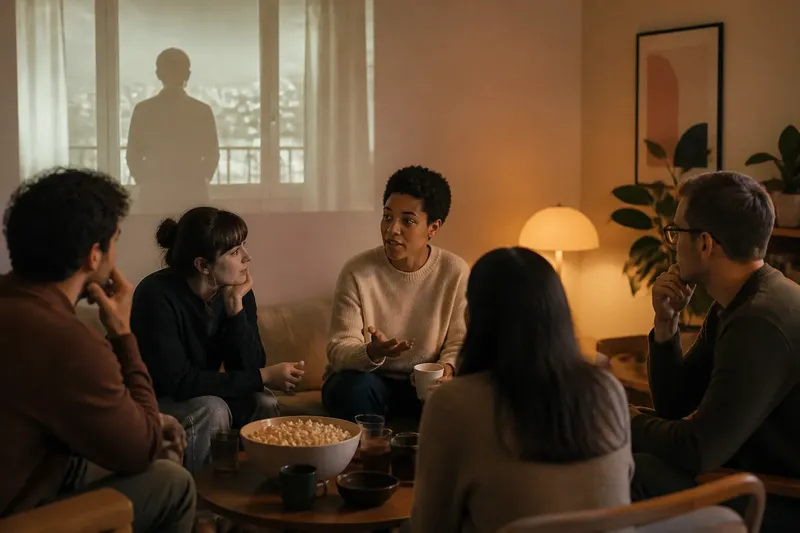
The credits finish, someone reaches for the snack bowl, and the room goes quiet. A two-question film club gives that pause a gentle shape: What moment stayed with you? What did it make you feel? The format is simple, but a gathering can still snag on silence, plot recaps, disagreement, or one person doing all the talking. Each problem has a practical adjustment that keeps attention on the moment and lets different responses coexist.
The two questions
Start with the first question: “What moment stayed with you?” It can be a glance, a sound, a cut, a line, an image, or a stretch of silence. The answer need not identify the film’s most important event. It only names a moment that lingered for that viewer.
Then ask: “What did it make you feel?” Invite a precise answer, but not a clever one. Someone might say uneasy, amused, tender, irritated, relieved, or several things at once. The point is not to diagnose the film or defend a verdict. It is to notice how a particular moment landed.
These questions work as a pair. The first gives the conversation something concrete to gather around; the second opens a space for difference. Two viewers can choose the same scene and describe opposite feelings without either having missed the film.
Silence after screening
What happens: Nobody answers right away, and the host starts filling the gap with plot details or their own interpretation.
Why it happens: People may need a moment to let the ending settle. They may also think the first answer has to be profound, or worry that a small observation is not worth saying aloud.
What to try: Leave a little quiet, then make the first question easier to enter. Offer a few kinds of moments without suggesting a correct choice: a face, a sound, a cut, a repeated gesture. You can also invite everyone to think privately before anyone speaks. Avoid calling on a person before they seem ready.
If the room remains quiet, answer first with a modest observation. Say, “I keep thinking about the pause before the door closed,” then leave room for others. A specific detail signals that no grand theory is required. It also gives the group something to respond to without steering them toward your feeling.
Keep the opening small. A pause can be part of the gathering, not a problem to defeat.
Plot recap takes over
What happens: The group retells the story from the beginning, and the two questions disappear beneath a sequence of events.
Why it happens: Recounting the plot is familiar and easy. It can also help someone remember what a scene referred to. But a full recap uses the room’s attention without necessarily explaining why any moment stayed with anyone.
What to try: Gently return to a particular instant. Ask, “Was there one image or sound from that part that stayed with you?” If a brief piece of context is needed, let the speaker give it, then ask about the feeling attached to the moment. This preserves the useful detail without reopening the whole story.
For instance, imagine a viewer starts retelling a tense family dinner scene. The host asks which moment from the dinner they still picture. The viewer names a character folding a napkin while everyone else argues, then says the gesture felt both funny and lonely. The conversation now has a detail and an emotional response to explore, rather than a second run through the scene.
Ask for a moment, not a complete account of what happened.
One person dominates
What happens: A confident viewer answers quickly, adds more scenes, and responds to each comment before others have a chance to speak.
Why it happens: Enthusiasm can turn into momentum. In an open discussion, the person with the readiest words may mistake a long turn for useful participation, while quieter viewers lose their opening.
What to try: Set a light structure before discussion begins. Give everyone a chance to name one moment before anyone comments on another person’s answer. If the group is large, invite a quick round in which each person may pass. Then ask who has a different feeling about a moment already mentioned.
The host can also interrupt kindly and specifically: “Let’s pause there and hear from someone who hasn’t spoken yet.” Avoid framing the quieter person as responsible for fixing the imbalance. The person who has spoken a lot can help by listening after their first contribution.
Make room for shorter answers. A concise response is still a full contribution.
Different feelings
What happens: One viewer calls a scene moving; another finds it embarrassing or cold. Someone starts arguing that one response must be wrong.
Why it happens: People can treat emotional reactions as ratings. If one response sounds like praise and another like criticism, the group may begin debating which judgment the film deserves rather than describing what each viewer experienced.
What to try: Keep the second question attached to the first. Ask what in the moment produced that feeling: the actor’s expression, the timing, a change in sound, the distance between characters, or what the viewer expected to happen. This invites explanation without asking anyone to withdraw a reaction.
Then let the difference remain visible. A scene might feel tender to someone who noticed a character’s patience and irritating to someone who noticed the same character refusing to speak plainly. The group does not have to settle on a shared emotion. It can understand more clearly why the responses diverged.
Ask what each viewer noticed before asking who is right.
Emotion stays vague
What happens: Answers stop at “good,” “sad,” or “weird,” and the discussion feels too thin to continue.
Why it happens: Broad words are easy to reach for, especially when a reaction is mixed or difficult to name. A viewer may also assume that explaining a feeling means making a case for it.
What to try: Offer gentle distinctions rather than a list of approved emotions. Was the scene sad in a comforting way or a bleak one? Did the moment feel surprising, awkward, familiar, or tense? Ask what changed in the viewer’s response as the moment unfolded. A person can revise their first word as they speak.
Do not turn the conversation into a vocabulary quiz. “I felt strange, but also relieved” may be more revealing than a polished label. If someone cannot name the feeling, they can describe a physical impression or an urge: wanting to look away, lean closer, laugh, or wait for the silence to end.
Use follow-up questions to make room, not to demand a better answer.
Opinions become verdicts
What happens: Comments such as “that was bad writing” or “the ending made no sense” shut down discussion before anyone describes a response.
Why it happens: A verdict can protect a viewer from having to explain a more uncertain feeling. It can also turn a personal reaction into a claim that the whole group is expected to accept.
What to try: Translate the judgment into an observation and a response. Ask, “Which moment led you to that?” and then, “How did it affect the way you felt?” A viewer might say that a sudden shift felt unearned, or that an awkward exchange made them laugh despite themselves. Those details give others something specific to consider.
This is not a rule against criticism. It simply keeps criticism connected to what a viewer saw and felt. Someone may still dislike a scene, but the group can hear the reason without turning the discussion into a contest over taste.
Trade a verdict for the moment that prompted it.
Questions for hosts?
How long should a film club discussion last?
Give the gathering enough room for each person to name a moment and describe a feeling, then let the conversation continue while it remains lively. A small group may need less time than a larger one, so let the number of voices guide the pace.
Should everyone answer both questions?
Invite everyone to answer, but allow passing. Some viewers may prefer to listen before they know what they want to say, and a voluntary turn keeps the format welcoming rather than compulsory.
What if nobody agrees on a memorable moment?
That is useful information about how differently the group watched. Let each person keep their own choice, then ask what kind of attention led them there: a character, an image, a sound, or a shift in mood.
Can the format work online?
Yes. A video call or group chat can use the same two questions, with a little extra pause so people do not talk over one another. In chat, ask everyone to share a moment first and feelings afterward, rather than sending a stream of reactions at once.
A small hosting plan
Before the gathering, tell guests the two questions so nobody arrives expecting a quiz or a review panel. After the film, offer water, tea, or a short stretch before starting. That pause gives viewers time to shift from watching to talking.
As host, keep the questions visible on a note card or scrap of paper. Begin with the moment question, let each person answer or pass, and follow with the feeling question. When discussion wanders, return to one of the two prompts rather than adding a new topic to rescue the room.
Try not to explain what a scene means on the group’s behalf. Your job is to make space for observations and reactions, not to settle them. If someone offers an interpretation, invite another person to name what they noticed or felt, whether it matches or differs.
The two-question film club is most useful when the host protects its simplicity. Let one moment bring the group together, then allow its feelings to branch. For your next film club, keep the prompts close and give every response—including a pause, a mixed reaction, or a pass—a little room.