What Changes When a Film Keeps Its Secret?
Learn how withheld information shapes film suspense, guides audience expectation, and changes the meaning of a scene without relying on a twist.
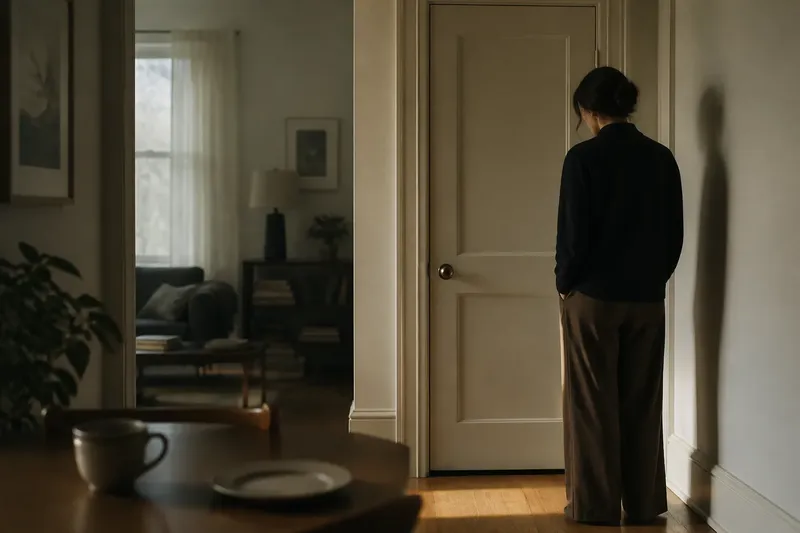
A character pauses outside a closed bedroom door, then walks away without opening it. In a film that keeps its secret, that small decision can hold more weight than a dramatic reveal. Withheld information shapes what viewers expect, how they read a scene, and what they notice while the story waits.
What does a film secret do?
A film secret is important information the story makes available to some characters, to the audience, or to neither yet. Withholding means controlling when that information becomes available. It is not automatically a puzzle, and it does not need to end in a surprise.
The main effect is a gap between what viewers know and what they want to know. A film can make that gap feel tense, tender, comic, or uneasy. The feeling depends on what the missing information might change: a relationship, a danger, a character’s motive, or the meaning of an ordinary action.
Consider the closed door. If a character knows who is inside but the audience does not, viewers may study the character’s hesitation for clues. If nobody knows whether the room is occupied, the pause carries a different uncertainty. The image stays the same; the distribution of knowledge changes its force.
Who knows what?
Viewers often track three kinds of knowledge: what the audience knows, what a character knows, and what the film leaves unknown to both. These positions can shift from scene to scene. A film may let viewers understand a threat before its protagonist does, then later conceal a motive that the protagonist already understands.
When the audience knows more than a character, a scene can create suspense through anticipation. A person reaching for a coat may seem in danger because viewers have seen someone hiding nearby. The question is no longer simply what will happen, but when the character will recognize the risk.
When a character knows more than the audience, attention turns toward behavior. A careful answer, a glance at a particular object, or a sudden change of subject can invite interpretation. Such details are not necessarily clues with one correct solution. They may show the strain of carrying knowledge that cannot yet be shared.
When both character and audience are uncertain, the film can make discovery a shared process. Viewers interpret the same sounds, faces, and surroundings available to the character. This can create intimacy, but it can also make a scene feel disorienting if the film gives too little context to form a useful expectation.
Why delay the answer?
Delay gives an expectation time to develop. A film might repeat an unanswered question across several scenes, allowing its emotional meaning to change. At first, the audience may wonder what happened. Later, the sharper question may be why a character cannot bring themselves to ask.
Timing also lets viewers interpret evidence before a film names it. A lingering shot of an untouched cup could suggest a recent departure, a broken routine, or nothing important at all. If dialogue immediately explains the cup, the shot becomes illustration. If the explanation comes later, viewers have time to attach their own possibilities to it.
That delay needs shape. A film can sustain interest by offering new information about the consequences of the secret, even while withholding its central fact. If every scene merely postpones the same answer, viewers may stop revising their expectations and begin waiting for the film to catch up.
How does a secret create suspense?
A secret creates suspense when viewers can imagine meaningful outcomes but cannot yet tell which one is coming. The uncertainty needs something to press against: a deadline, a fragile relationship, an approaching decision, or a character’s changing behavior. Without that pressure, a missing fact may remain abstract.
Say a film shows a woman placing an extra plate at dinner, then repeatedly checking the front window. The audience does not know whom she expects. Each quiet action makes a possible arrival feel more consequential, especially if another character avoids asking about the plate. The scene’s suspense comes from watching expectation alter the meal, not from a sudden shock.
Expectation can also guide attention toward the wrong question without making the film unfair. Viewers might focus on who will arrive, while the deeper tension concerns whether the woman will let that person in. When the answer comes, it can clarify the situation and still leave the emotional decision unresolved.
Does every secret need a reveal?
No. A film may answer the factual question while leaving its emotional meaning unsettled, or it may choose not to answer at all. An unresolved secret can feel purposeful when the film shows what uncertainty does to its characters and gives that uncertainty a place in the story’s ending.
A reveal is useful when it changes how viewers understand earlier scenes or what a character must do next. It is less satisfying when it supplies information without altering the story’s pressures. The relevant question is not whether a revelation is shocking, but whether it earns the attention the film has asked viewers to give it.
Sometimes the character’s response matters more than the information itself. A confession might explain a past action, yet the revealing scene turns on whether another person believes it. The fact closes one gap; the reaction opens a new one.
How should viewers read withheld information?
Start by noticing the boundary of knowledge rather than guessing the answer. Ask who appears to know something, what the audience has actually been shown, and which question the scene is encouraging you to carry forward. This keeps an interpretation tied to the film’s choices instead of treating every detail as a coded clue.
Then watch for changes in emphasis. Does the camera linger on a listener instead of the speaker? Does an ordinary sound become prominent after a subject is avoided? Does a character repeat an action differently once another person enters? These formal choices can show how uncertainty shapes a scene even when they do not disclose its secret.
Finally, separate the fact a film withholds from the feeling it builds around that absence. The answer may explain what happened, while the pauses and reactions reveal why the knowledge mattered. That distinction is often where a film’s secret continues to work after the fact is known.